
The Beginner Coach's Roadmap to Leading a Youth Competitive Swimming Team
TTheGuideTeam · August 5, 2026 · 5 min read
You said yes. Maybe a parent called, a club director emailed, or the team simply had no one else. Either way, you're standing at the edge of the pool deck with a whistle around your neck and a roster of kids staring back at you — and you want to get this right.
The good news: you don't need to know everything before your first practice. You need to know what to learn first. That's what this roadmap gives you — a logical sequence that keeps kids safe, builds your confidence, and earns your athletes' trust before you ever get to the advanced stuff.
Step 1: Safety Before Strokes
Before you teach a single flip turn, lock down your safety foundation. This isn't optional and it isn't a formality — it's the non-negotiable first layer of your coaching knowledge.
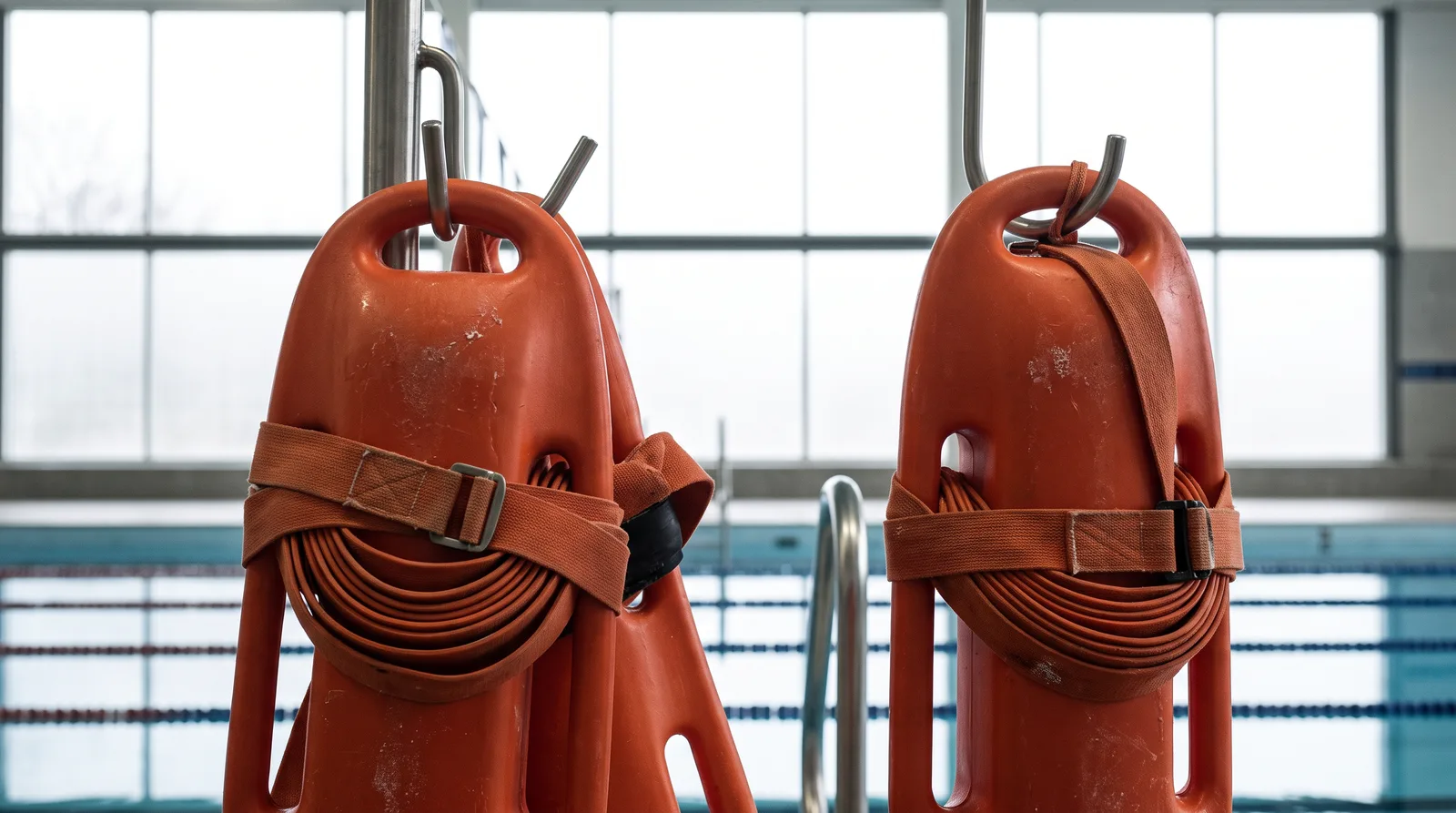
- Know your facility's emergency action plan. Where is the rescue equipment? Who calls 911? Who clears the pool? Walk through it before your first session.
- Get CPR and first aid certified. Most USA Swimming–affiliated programs require it. Do it now, not eventually.
- Understand your supervision ratios. How many eyes are on how many swimmers at all times? Younger and less experienced athletes need tighter ratios.
- Learn the signs of distress. A struggling swimmer often looks surprisingly quiet — arms barely moving, head tilted back, body vertical. Silence is not always calm.
Safety knowledge doesn't slow down a program. It's what allows every other part of the program to exist.
Step 2: Master the Four Competitive Strokes — At a Teaching Level
You do not need to swim at a collegiate level to coach youth competitive swimming. You need to understand each stroke well enough to see errors and describe corrections to a kid.
Start with freestyle and backstroke — these are the strokes most beginners work on first, and they share fundamentals like body position, rotation, and kick mechanics. Then move to breaststroke, which has the most technically precise rules about simultaneous arm pulls and kick symmetry. Save butterfly for last; it's the most physically demanding to teach and to troubleshoot.
For each stroke, learn to answer three questions:
- What does correct body position look like from the deck?
- What are the two or three most common beginner errors?
- What's the simplest drill to fix each one?
You don't need to master butterfly biomechanics on day one. You need to recognize when a breaststroke kick is illegal before a meet referee does.
Step 3: Understand Child Development by Age Group
A 7-year-old and a 14-year-old are not the same athlete — not physically, not emotionally, not motivationally. One of the fastest ways to lose a young swimmer is to coach them like they're a smaller version of an adult.
Here's a rough working framework:
- Ages 6–9: Short attention spans, high energy, driven by fun and immediate feedback. Drills should be game-like. Praise effort loudly and often.
- Ages 10–12: Beginning to care about fairness, peer relationships, and personal improvement. They can handle slightly more technical feedback, but connection still drives effort.
- Ages 13+: Identity and belonging matter enormously. They can handle honest critique — but how you deliver it determines whether they hear it.
Tailor your communication to the developmental stage in front of you, not the stage you wish was in front of you.
Step 4: Learn Meet Logistics Before You Need Them
Swim meets are chaotic if you've never run one. Calm that chaos in advance.
Learn how events are seeded and how heat sheets work. Understand scratch deadlines — missing one can disqualify your swimmer or cost your team points. Know the warm-up timeline and how to stage your athletes so they're ready without burning energy. Find out who handles timing, who handles results, and who your athletes should report to if they need help.
Walk through an entire meet day on paper before you experience one in real life. The coaches who look composed at meets aren't superhuman — they've just seen the sequence before.
Step 5: Build Team Culture Deliberately
Culture isn't what you hang on a banner. It's what happens when something goes wrong — when a swimmer false starts, finishes last, or breaks down crying behind the blocks.
Set your behavioral expectations in the first week and repeat them constantly. Make it clear how teammates talk to each other, how they respond to a teammate's personal best and their worst race, and what your locker room norms are. Kids will rise to standards that are clearly communicated and consistently modeled.
The coaches kids remember for life weren't always the most technically sophisticated. They were the ones who made the pool feel like a place where effort was respected and every kid belonged.
The Right Order Matters
Most beginner coaches try to learn everything at once and end up feeling overwhelmed or, worse, they skip safety and culture entirely in favor of drills. The sequence above is deliberate: safety first, technical knowledge second, developmental awareness third, logistics fourth, culture woven throughout.
If you want to work through all of this systematically — with structured lessons, practical tools, and the full certification framework — my course Put Me in Coach – Youth Competitive Swimming was built exactly for where you are right now. Every module follows this same logic: keep kids safe, understand who they are, then teach them to swim faster.
You said yes. Let's make sure you're ready.
Want to go deeper than a blog post?
Put Me in Coach™ - Youth Competitive Swimming
A complete coaching certification course for youth competitive swimming that equips coaches at every level with the techniques, safety knowledge, and people skills to build confident, capable swimmers — and great kids.
Start learning — $24.99/mo